
Accelerated DepreciationWhy Real Estate Gets Written Off Faster
Why the tax code lets real estate investors deduct a property’s cost faster than the building wears out, and what that means for you as an investor.
Educational only. This is not tax advice. It explains how the rules work, not what you should do. Your own situation decides the answer, so consult your tax advisor before acting on any of it.
Have questions about how this plays out in our funds? Connect With Investor Relations →
What Is Depreciation, and Why Does the Tax Code Allow It?
Every building wears out, so the tax code lets owners deduct part of a property’s cost each year. That is depreciation.
What makes real estate different is how fast some of that deduction can arrive, designed specifically to encourage investment in real estate.
The parts of a building that wear out sooner get shorter schedules, and under current law anything on a schedule of 20 years or less can be written off in full in year one.
Why does the tax code allow it?
A roof, the flooring, the mechanical systems: all of it degrades over time. Depreciation is not a loophole, just an acknowledgment that a building is a depreciating asset, the same way a vehicle or a piece of equipment is.
Why is land left out?
Land does not wear out, so it never depreciates. When a property is bought, the price is split between land and building, and only the building part is written off.
Which parts get the shorter schedules?
Things like carpet, appliances and furniture in a rental (5 years), and site work such as the parking lot, sidewalks and landscaping (15 years). The roof, HVAC, wiring and plumbing are usually treated as part of the building itself, so they stay on its 27.5 or 39 year schedule. A cost segregation study is what sorts each part into its bucket.
What is bonus depreciation?
It lets anything with a recovery period of 20 years or less be deducted in full in the year it is placed in service, rather than spread out. It is 100 percent for property acquired after January 19, 2025. It does not reach the building itself.
Looking for Depreciation in Your Portfolio?
The PPR Keystone Housing Growth Fund holds its rental-home communities directly, so investors share in the depreciation, reported on a K-1. What you can use depends on your tax situation. Learn About the Fund →
Typical IRS recovery periods. The orange parts fall inside the shaded zone, so they can be written off in year one. The roof, HVAC, wiring and plumbing usually ride with the building. A cost segregation study decides which bucket each part of a specific property belongs in.
Sources
- IRS Publication 527 (residential rental property: appliances, carpets, furniture, land improvements, buildings)
- IRS Publication 946 (office furniture and equipment, nonresidential real property); bonus depreciation: 26 U.S.C. §168(k)
Key Takeaways
- Real estate owners can deduct a property’s cost over time, often a large share in year one.
- For most investors it offsets passive income, not wages or active business income.
- A cost segregation study finds the parts of a property that qualify for faster write-offs.
- Leverage raises the deduction relative to the equity invested. Basis and at-risk limits still apply.
- Not every property benefits equally. Car washes are a notable exception.
- It is a deferral, not a permanent write-off: some is recaptured when a property sells.
General education, not tax advice. Every investor’s situation is different. Consult your tax advisor before acting on anything here.
Six Phrases to Know First
Depreciation
A yearly deduction allowed because buildings wear out. You spend nothing to claim it.
Recovery Period
The years the code assigns to a thing, set by category rather than by how long it really lasts.
Cost Segregation
An engineering study that splits a property into parts, so each is written off over its own period.
Bonus Depreciation
Deducting parts with a recovery period of 20 years or less in full in year one. It does not reach a house or office building itself.
Basis
What the property counts as having cost, including the part paid for with debt. Depreciation is figured on it.
Recapture
On sale, the depreciation you claimed is added back into your taxable gain.
*The $3,500,000, 20-unit example: $2,712,500 of building after $787,500 of land.
Illustrative only, not tax advice. Figures assume a study moves 15% of the building to 5-year and 10% to 15-year property; every study differs. Straight-line, full first year, 100% bonus depreciation. How much an investor can use depends on their basis, at-risk amount and passive income. Consult your tax advisor.
How Accelerated Depreciation Actually Benefits an Investor
A standard depreciation schedule spreads a building’s cost evenly over 27.5 or 39 years. Accelerated depreciation breaks that same cost apart first.
In this example, a study plus bonus depreciation makes the year-one deduction about 7.6 times larger.
What Does a Cost Segregation Study Do?
It prices each part of a property, so the parts that wear out sooner get their own, shorter IRS schedules.
Read the Full Explanation
An engineering-based study breaks a property’s total cost into components. Land, the building shell, and then everything else: flooring, fixtures, certain electrical and plumbing work, site improvements and parking. Each component gets its correct, shorter IRS recovery period instead of defaulting to the building’s 27.5 or 39 years.
Why Does That Matter for Year One?
Anything on a schedule of 20 years or less can be deducted in full, right away.
Read the Full Explanation
Under current bonus depreciation rules, every component with a recovery period of 20 years or less can be deducted in full, immediately. So the real question for any property is what share of its cost ends up in those shorter buckets. That share drives the first-year benefit, and it is specific to the property: its type, its finishes and its age.
How This Plays Out in Commercial Real Estate
How the IRS Treats Each Use
Select a use to see the rule.
Apartments and Rental Homes27.5 Years
The code treats a building as residential rental property when at least 80 percent of its rent comes from units people live in. Single-family rentals, townhomes and apartment buildings usually land here.
Offices, Stores and Warehouses39 Years
Buildings rented for business use are nonresidential real property, written off over 39 years. Parts a study pulls out, like some fixtures and site work, can still go on shorter schedules.
Mixed Use27.5 or 39
Apartments over shops or offices are judged as one building. If more than a fifth of the rent comes from the commercial space, the whole building moves to 39 years.
Hotels and Short Stays39 Years
A hotel or motel where more than half the rooms are rented short term is not housing to the code, so it is treated as nonresidential and written off over 39 years.
Source: 26 U.S.C. §168(c) and (e)(2)
Free Ebook
Want the full walkthrough?
Our depreciation ebook goes step by step through cost segregation, bonus depreciation and the questions to ask before you invest.
For most commercial and residential real estate, the building shell, the part that cannot be reclassified, is still the majority of the cost. A cost segregation study typically moves a meaningful minority of the total into the faster 5, 7 and 15 year buckets, and the rest stays on the standard schedule.
That is still a real, front-loaded benefit, just not an all-or-nothing one. Which standard schedule the rest stays on depends on its use. An apartment community is commercial real estate to an investor, but the code puts it on the residential clock.
Talk It Through With Our Team
Have a question about how depreciation works in a fund, or which PPR funds pass it through to investors? Our Investor Relations team can walk you through it. For how it applies to your own taxes, consult your tax advisor.
Where This Applies at PPR
The PPR Keystone Housing Growth Fund holds its communities directly, so investors take a share of the depreciation that comes with them, reported on a K-1.
Ready to get started? You can begin now through our investor portal →

Why Some Properties Are Treated Differently
Not every building is classified the same way. Car washes are a clear example of the exception, not the rule.
The building is 15-year property and much of the cost is short-life equipment. Both sit at 20 years or less, so both can take bonus depreciation, and a large share of a car wash’s cost can qualify for an immediate, first-year write-off: a larger outcome than a typical commercial building, for structural reasons specific to that asset type.


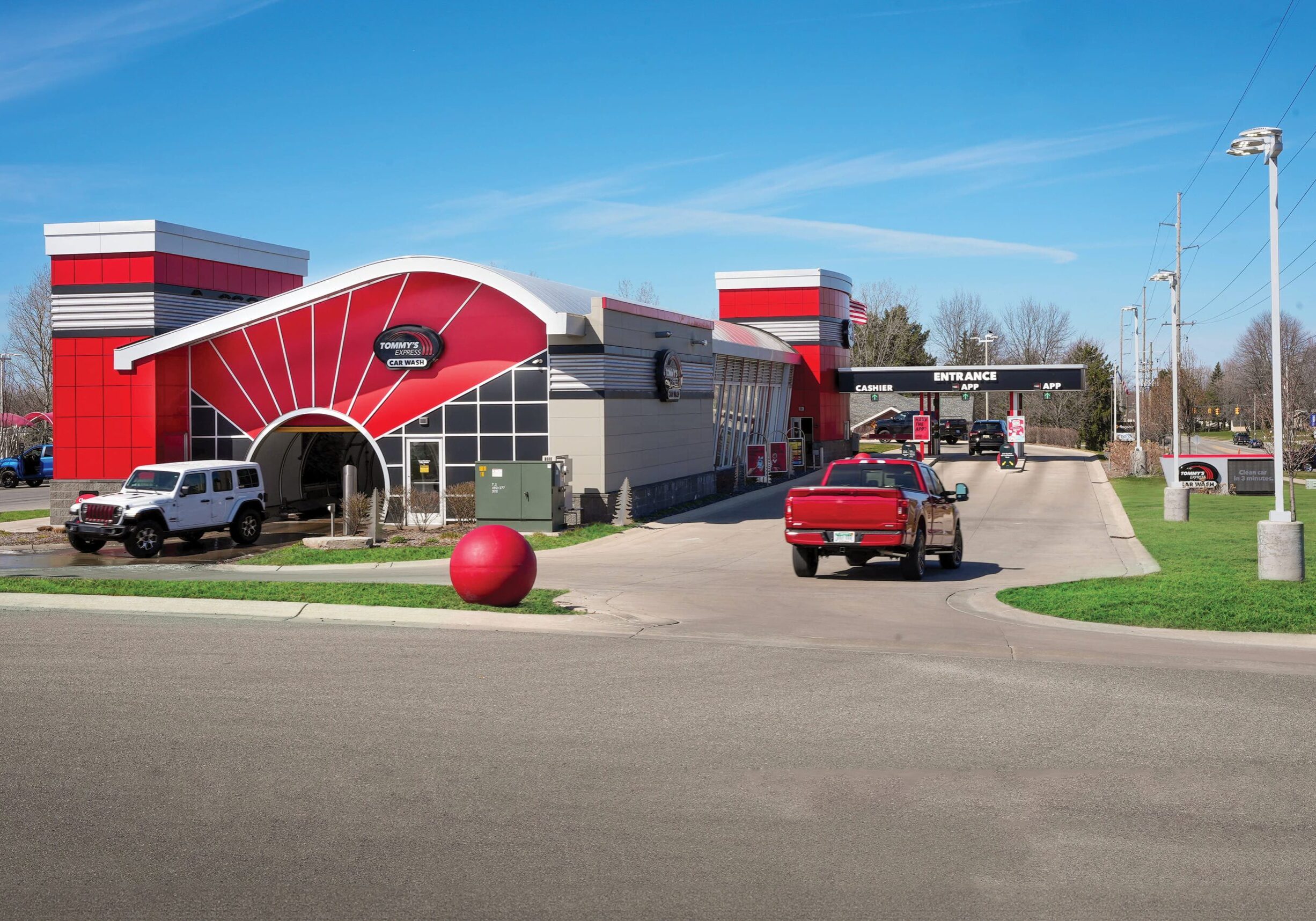
The building itself is 15-year property. Under IRS asset classification rules, a car wash building is categorized as 15-year property (asset class 57.1), not the 39-year life that applies to most commercial buildings.
Much of the cost is equipment, not building. The tunnel equipment, conveyors, dryers and water-reclamation systems are short-life property to begin with: 5 years (asset class 57.0).
The land underneath is never depreciable. That is true for a car wash, an apartment community or any other property.
Generic diagram for illustration, not a specific property. Select Building, Equipment or Land to see how the IRS treats it.
Sources
- Office or store, 39 years: 26 U.S.C. §168(c), IRS Publication 946
- Apartment building, 27.5 years: §168(c) and §168(e)(2), IRS Publication 527
- Car wash building, 15 years: Rev. Proc. 87-56, asset class 57.1, quoted in Iowa 80 Group v. IRS (8th Cir. 2005)
- Car wash equipment, 5 years: asset class 57.0, IRS Publication 946, Appendix B
- Bonus depreciation: §168(k), IRS Notice 2026-11
Car Washes at PPR
It is one reason car washes draw real estate investors. PPR’s Opportunity Fund II, open to qualified purchasers only, builds and owns car washes on the Tommy’s Express model shown in the photos.
Learn About the Fund →Illustrative, straight-line only: $800,000 ÷ 27.5 years, before any study or bonus. The debt does not shrink the deduction, because depreciation is figured on the whole cost. It only shrinks the equity it is measured against.
The Leverage Advantage: Why Debt Makes This Better, Not Worse
Here is a detail that surprises a lot of investors: depreciation is figured on a property’s full cost, including the part financed with debt, not just the cash equity put in.
A lender who finances part of a purchase has no ownership stake, so it has no claim to any of the depreciation. That deduction belongs to the owners. So the more of a deal that is financed with debt, the larger the deduction becomes relative to the equity actually invested.
The limits still apply. As a fund investor you can generally use losses only up to your basis and the amount you have at risk, and a passive loss still needs passive income to offset. Your K-1 and your CPA decide what is usable in a given year.
The Caveats
This is general education, not individualized tax advice. Every investor’s situation is different. Consult your own tax advisor.
Click any caveat to read more.
This Offsets Passive Income, Not Everything
Unless you qualify as a Real Estate Professional under IRS rules, depreciation from a passive real estate investment generally can’t be used against W-2 wages or active business income.
In the code: 26 U.S.C. §469
It’s Not a Permanent Write-Off
When a property eventually sells, this benefit is “recaptured” and taxed, often at a different rate than ordinary capital gains.
In the code: 26 U.S.C. §1245 and §1(h)
Timing Matters
The benefit is tied to when a property is acquired and placed in service: a deal that closes late in the year captures less first-year depreciation than one that’s been running since January.
In the code: 26 U.S.C. §168(d)

Free Ebook · 10 Pages
Real Estate’s Best-Kept Tax Secret
For educational purposes only. This guide is not tax advice. Consult your tax advisor before making any decisions.
Everything on this page, in more depth. What you’ll learn:
- How a cost segregation study moves part of a building onto 5, 7 and 15-year schedules
- A worked 20-unit example of the year-one deduction, with and without a study
- Why car washes are treated so differently, and how leverage stretches the deduction
- The caveats to know first: passive income, recapture and timing
Common Questions
Using the Deduction
Can depreciation offset income from my job?
Generally no, unless you qualify as a Real Estate Professional under IRS rules. For most investors, it offsets passive income only.
What happens to a loss I can’t use this year?
It generally carries forward to future years and can be released when you sell your entire interest. For many investors, the benefit shows up at exit rather than every April.
Does this work the same in a retirement account?
Generally no. Inside a self-directed IRA that holds a leveraged real estate investment, depreciation has to be figured on the slowest method, with no bonus depreciation, so the strategies on this page do very little there. It’s worth knowing before you choose which account to invest from.
What happens to the depreciation benefit if I sell?
Some of it is recaptured and taxed at the time of sale. It’s often better thought of as a deferral than a permanent write-off.
How the Benefit Works
What does a cost segregation study actually do?
An engineering-based study breaks a property’s total cost into components: land, the building shell, and then everything else, like flooring, fixtures, certain electrical and plumbing work, site improvements and parking. Each component gets its correct, shorter IRS recovery period instead of defaulting to the building’s 27.5- or 39-year life.
Does leverage really change how much I benefit?
Yes. Depreciation is based on the property’s full cost, debt included, but the deduction flows only to equity holders. More leverage generally means a larger benefit relative to the equity actually invested.
Why do car washes get a bigger benefit?
Because of how the tax code classifies car wash buildings and equipment: the building itself qualifies for a shorter recovery period than most commercial property, and the equipment inside was already short-life to begin with.
Is this the same for every fund or property?
No. The benefit depends on a completed cost segregation study and the specific property’s acquisition and placed-in-service timing. Figures should always be treated as estimates until that study is complete.
Where This Comes From
- Depreciation schedules and bonus depreciation: 26 U.S.C. §168, IRS Publication 946, IRS Publication 527, IRS Notice 2026-11
- Passive activity rules: 26 U.S.C. §469; at-risk rules: §465
- Recapture: §1245 and §1(h)
- Car wash classification: Rev. Proc. 87-56, asset classes 57.0 and 57.1, quoted in Iowa 80 Group v. IRS (8th Cir. 2005)
This page is for informational and educational purposes only. It is not tax, legal or investment advice, and it is not an offer to sell or a solicitation of an offer to buy any security. Offers are made only through a fund’s private placement memorandum. Tax outcomes depend on your individual circumstances; consult your own tax advisor before acting on anything here. Figures are illustrative.